Case studies
IVAR Case Study: 3D Printing for Hydronics
How IVAR Hydronic Solutions cut lead times and TCO by outsourcing prototyping and tooling to a partner specialized in additive manufacturing and DfAM.
Case study: the move to Additive Manufacturing as-a-Service
IVAR Hydronic Solutions, an Italian leader in hydronic systems headquartered near Brescia, Italy, has consolidated a strategic partnership to outsource its entire prototyping and production tooling ecosystem. The result: shorter lead times, recovered production floor space and a lower Total Cost of Ownership.
The context
IVAR operates in a market that demands continuous product development cycles and rigorous quality standards. Hydronic components combine complex internal geometries, tight fluid-dynamic tolerances and high-pressure sealing: factors that call for assembly lines supported by highly customized jigs, fixtures and tooling.
The challenge: the limits of the "in-house" model
The previous setup combined in-house CNC milling with an industrial powder-bed printer. It ran into three recurring problems:
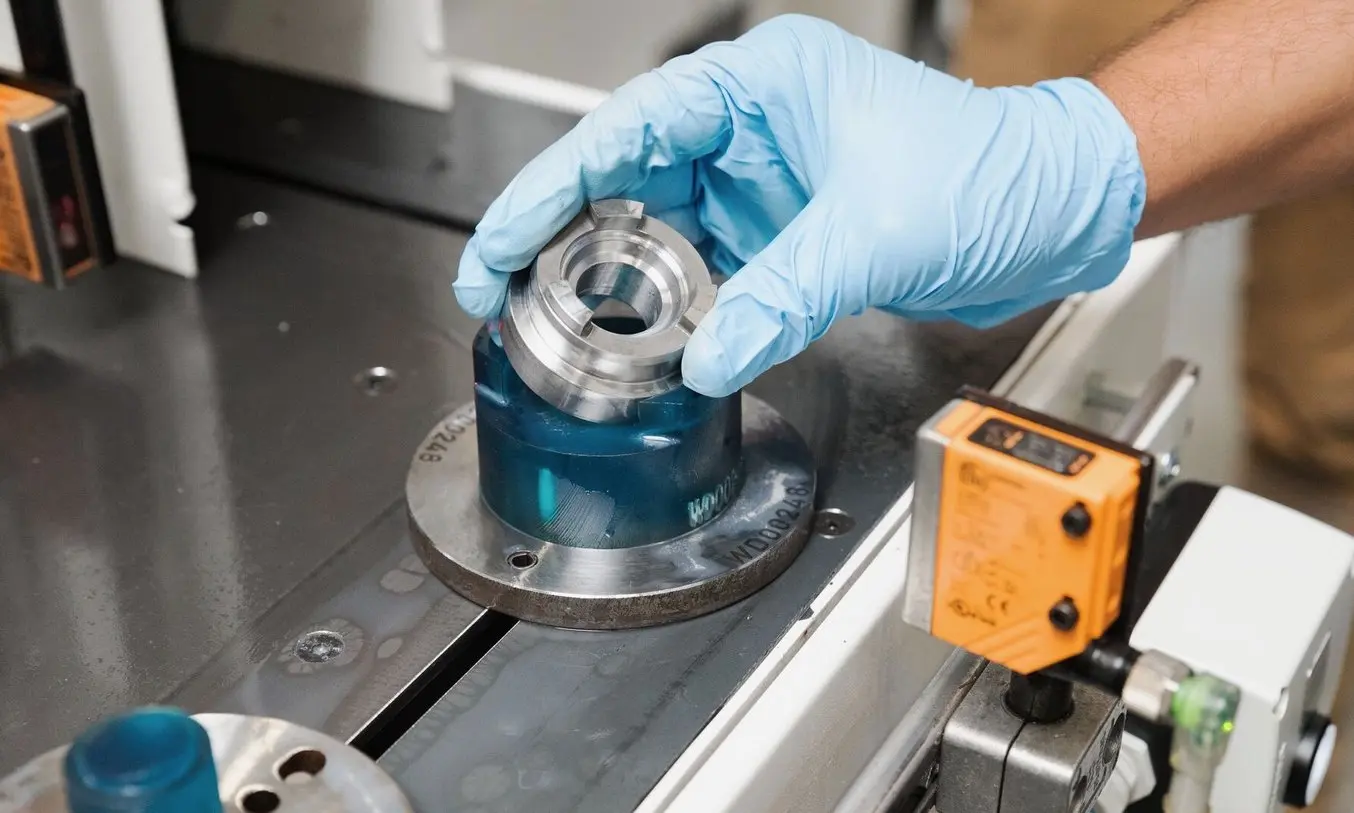
- CNC bottlenecks: making a simple aluminum jig took 3–4 weeks of CAM programming, machine setup and tool wear.
- Complex management of in-house additive: the powder printer and the depowdering stations took up valuable production floor space, required strict environmental control and generated significant OPEX.
- Downtime and dedicated staff: machine tending, scheduled maintenance and rapid technological depreciation diverted resources from process engineering.
The solution: Print-as-a-Service + DfAM
IVAR made a paradigm shift: from owning the asset to using the service. The additive partner handles:
- DfAM consulting: redesigning components to exploit the geometric freedom of 3D printing (assembly consolidation, lightweighting, conformal internal channels).
- Technology and material selection: FDM in high-performance polymers for thermally stressed tooling, SLS for isotropic production, MSLA for high-resolution jigs.
- On-demand production: one-off batches or short runs delivered in 48–72 hours.
Technologies and materials used
| Application | Technology | Material | Key benefit |
|---|---|---|---|
| Assembly jigs | FDM | Nylon CF / PA12 | Stiffness, fatigue resistance |
| Test fixtures | SLS | PA12 | Isotropy, functional detail |
| Inspection masks | MSLA | Engineering resin | Fine detail, smooth surfaces |
| Thermal tooling | FDM | PPS / Ultem | Stability >150 °C |
The results
- Tooling lead time: from 3–4 weeks to 48–72 hours (a reduction of more than 85%).
- Floor space recovered: the in-house additive system and its post-processing stations were decommissioned.
- TCO: no more maintenance contracts, spare parts, consumables or staff dedicated to machine tending.
- Time-to-market: faster NPD cycles thanks to functional prototyping in 24–48 hours.
"Outsourcing 3D printing to an engineering-driven partner has let us focus our internal resources on product engineering while keeping full flexibility on our line equipment."
Lessons you can replicate
The IVAR case confirms three principles that hold true for Italian manufacturing:
- Additive manufacturing delivers its full value when it is designed as a service, not as an in-house department.
- DfAM is the multiplier: without redesign, 3D printing merely replicates the CNC part and loses the benefits of consolidation and lightweighting.
- A multi-technology mix (FDM + SLS + MSLA + CFC) covers the full range of industrial applications better than any single in-house machine.
Is CNC tooling costing you weeks of lead time? Contact us for a free technical analysis: we review your CAD file and propose the most efficient additive route.